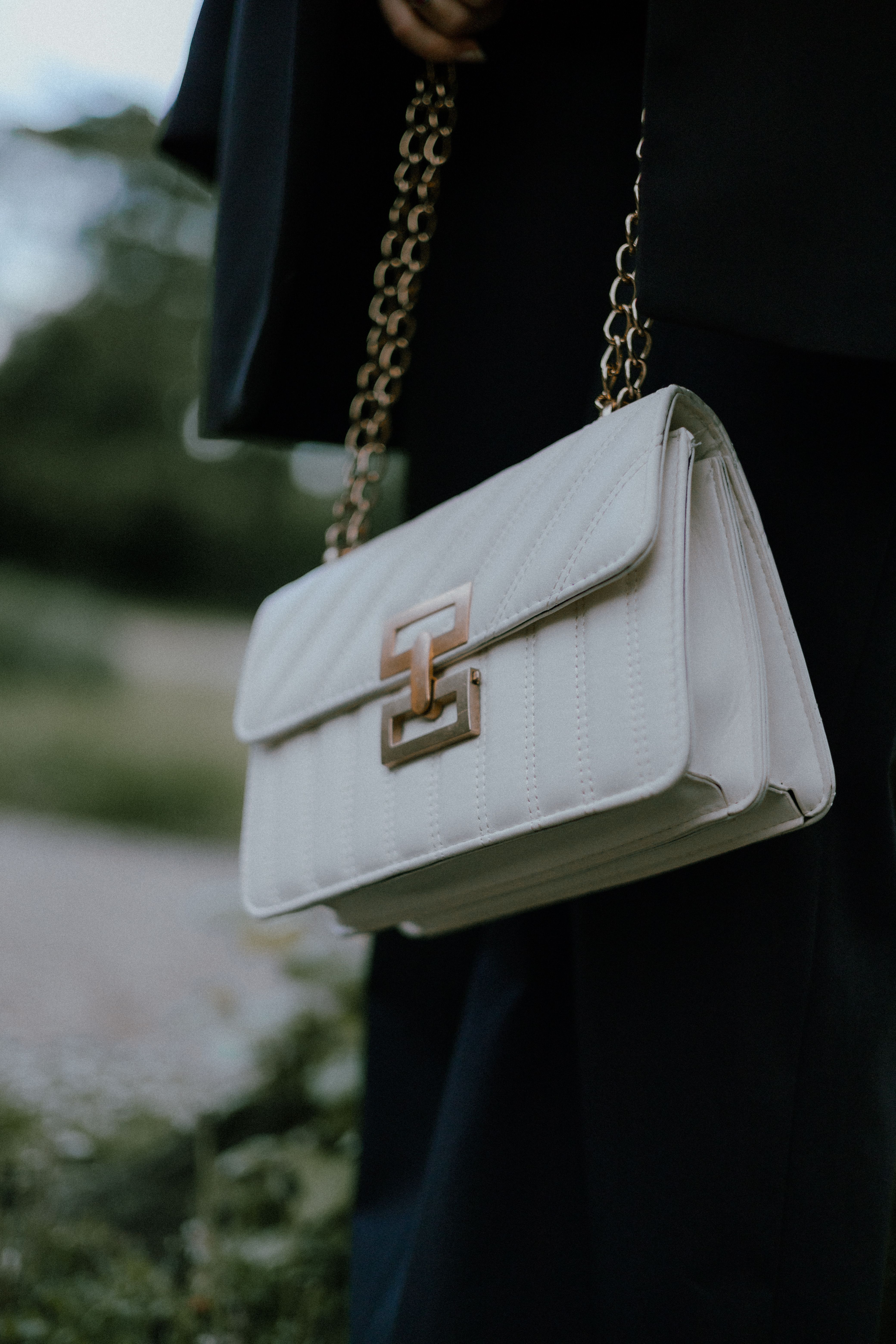
Why Ferragamo Bags Are Made in Italy and How You Can Check
Of the claims made about a luxury handbag, country of origin is one of the uncommon ones you can check for yourself in under a minute, and Ferragamo makes that check unusually clean. On the brand’s own webstore, every current bag product page shows the words Made In ITALY, while the Studio Bag collection page states that each bag in the family is crafted in Italy. That is the verifiable part, and this article treats it as the anchor. The remainder of the story, which is why a Florentine house ended up making bags at all, is context that explains the label rather than proving it. Keep what the company publishes clearly distinct from what the internet has decided on its behalf. All prices below are observed 2026 market prices, recorded on the brand’s own US webstore in September 2026.
Why the Geography Is Florentine: Bags Came Late
Salvatore Ferragamo founded the house in 1927 and built it on footwear, working from Florence with Palazzo Spini Feroni as its home. Handbags are a second chapter: in 1965 Fiamma Ferragamo began designing bags and small leather goods as accessories to the shoes, and the first press article featuring a Ferragamo bag is dated 1969. Because the leather-goods business grew inside an existing Tuscan production culture instead of being stitched together from scratch somewhere cheaper, that sequence matters for a manufacturing question. By the time the first bags appeared, designer tote bags a shoemaker’s pattern-cutting habits and finishing standards were already embedded. Florence itself belongs in the answer, having been a leather-working centre for centuries, and a structured handbag asks for the same skills as a fine shoe. Reading Made In ITALY on a current bag page means reading the end of a line that starts with footwear.
Osmannoro and How the Workshop Model Works
The documented shape of production is modest, so it is better stated precisely than embellished. From 1967 onward the Osmannoro factory near Florence handled design and prototyping, and production was carried out through workshops located near Florence and Naples. That is a two-part structure familiar across Italian leather goods, pairing a central studio that draws, models and approves with specialist external workshops that execute. It is also why made in Italy usually describes a network here rather than a single building. Anyone who offers you more detail than that about suppliers, tanneries or hide sourcing is filling a gap the company does not fill publicly. The honest position is that the country of manufacture is documented while the individual workshop behind any given bag is not.
The Sentence Printed on Every Product Page
Here is the part you can verify in a browser rather than take on trust. Pull up any current handbag in a Ferragamo shop online, scroll down to the composition and details block, and the origin line reads Made In ITALY, in exactly that capitalisation. That held up for every bag examined during research, from entry-level Gancini pieces up to the exotic top of the range. The Studio Bag collection page is more explicit in plain words, stating that each bag in the collection is crafted in Italy. Running the check takes seconds and gives you a first-party statement instead of a forum opinion. You also end up with a reference point for the moment a third-party listing goes vague about origin, which is a common feature of listings that warrant suspicion.
What the Product Code Really Tells You
The other thing every current bag page shows is a two-part product code, and it is widely misunderstood. The Hug XS is listed as 215975 768853, the medium python Gancini handbag as 21A894 796650, and the small Iconic Top Handle as 216176 793846. The first block is a style code, the second a variant code, and in combination they identify a model in a particular material and colour. Because they identify no individual unit, they are not serial numbers in any meaningful sense, and whether those same digits are stamped inside a given bag is something the company does not confirm. The distinction matters the moment a seller flashes a code at you as proof, since at best it shows the listing matches a real model. Use the code as it is actually useful: check it against the brand’s own site to confirm the bag, material and colour exist.
| Claim you will encounter | Status | The test |
|---|---|---|
| Made In ITALY printed on the product page | Verified on every current bag page | Read the details block on the brand’s site |
| Studio Bag collection, produced in Italy | Written on the collection page | Read through the collection description |
| Design and prototyping sat near Florence from 1967 | Historical record | History only, invisible on the bag itself |
| Production through workshops near Florence and Naples | Historical record | Not disclosed for individual bags |
| Serial numbers, date codes and authenticity cards | Not brand-confirmed, blog-sourced | There is no published brand guide |
| The product code names one specific unit | Incorrect, it identifies model and colour | Match the code to the model on the brand’s site |
Where the Hand Work Shows: the Materials
Where a legal statement about origin meets a physical one about craft is the material list. Official composition fields across the current line-up name calfskin in smooth and grained or hammered finishes, suede, python, hand-woven wicker with silk lining, raffia, canvas and jacquard. A number of those materials resist industrialisation, which is the crux of it: in the small size, a hand-woven wicker Iconic Top Handle lined in silk was observed at $4,800, measuring 7.8 by 7.8 by 4.7 inches, and the weave is the entire object. The skin drives cutting and matching in a second case as well, the medium python Gancini handbag at $4,100, 7.2 by 13.3 by 4.7 inches. Even the everyday calfskin pieces, the Hug XS at $2,600 and 5.5 by 8.8 by 4.3 inches among them, reveal hand assembly in their folded side panels and two golden Gancio buckles. Those observed 2026 market prices track material difficulty far more closely than they track size.
Made in Italy Is Not a Synonym for Genuine
Origin and authenticity are separate questions, and it is worth saying so without hedging. Counterfeit operations print origin labels just as readily as they lift official photography, which means the stamp on an object of unknown provenance proves nothing on its own. Origin is only useful alongside channel, since a bag bought from the brand’s own site, its boutiques or a verified stockist such as Nordstrom, Bloomingdale’s, Saks Fifth Avenue, Mytheresa or Farfetch carries the claim with a chain of custody. A site presenting itself as an official Ferragamo outlet fails that test structurally, because no such online channel exists and the only official online discount route is a seasonal Ferragamo sale section on the brand’s own site. On the secondary market, platforms still file everything under Salvatore Ferragamo, which is why searches for salvatore bags land there rather than on the current collection. What the company itself asks is simply buying through its website or through authorised stores and distributors.
The One Physical Touchpoint Is Repair Services
If you want someone connected to the company to handle your bag in person, there is exactly one official route. Ferragamo provides Repair Services for a selection of authentic products, requested at selected stores with proof of purchase. Described as valid regardless of the country or sales channel of the original purchase, it quietly becomes the most useful physical touchpoint the brand offers. Nobody should describe it as an authentication service, because it is not one, and the company publishes no authentication programme whatsoever. All the same, handing a bag across a counter to people who handle the product daily outdoes posting photographs to a forum. Initials personalisation is also offered at selected boutiques, another reminder that the physical network does things a webstore cannot.
A Verification Routine That Takes Two Minutes
Taken together, the pieces make a process short enough to complete on a phone. Find the model on the brand’s own site, read the origin line in the details block, and note the two-part product code alongside the official price. Compare the seller’s listing against all three, because a mismatch in material, colour or dimensions tells you more than a close-up photograph. Consider the material claim next, because hand-woven wicker or python has physical characteristics a cheap copy will not reproduce even when the label is correct. Then apply the channel test, treating the brand’s own shop, its boutiques and the verified stockists as the safe list and treating anything advertising itself as an online outlet as disqualified. Last of all, ignore certificate and serial-number claims, and bring any real damage to Repair Services rather than to a stranger. A search for a feragamo bag with one r turns up plenty of sellers with a story, and the origin line on the brand’s own page is the only part you can read for yourself.